
The complete guide
Choosing and Placing a Solar Motion Sensor Security Light
Make the route to your door easier to see
A dark approach can turn a simple trip outside into a search for the step, gate, or keyhole. You may only need light for a short walk from the driveway. Or you may prefer a low level of light near the back door throughout the evening.
A solar motion sensor security light offers an option for these everyday needs. It uses sunlight for charging and can respond when movement is detected. That makes its position just as important as its features.
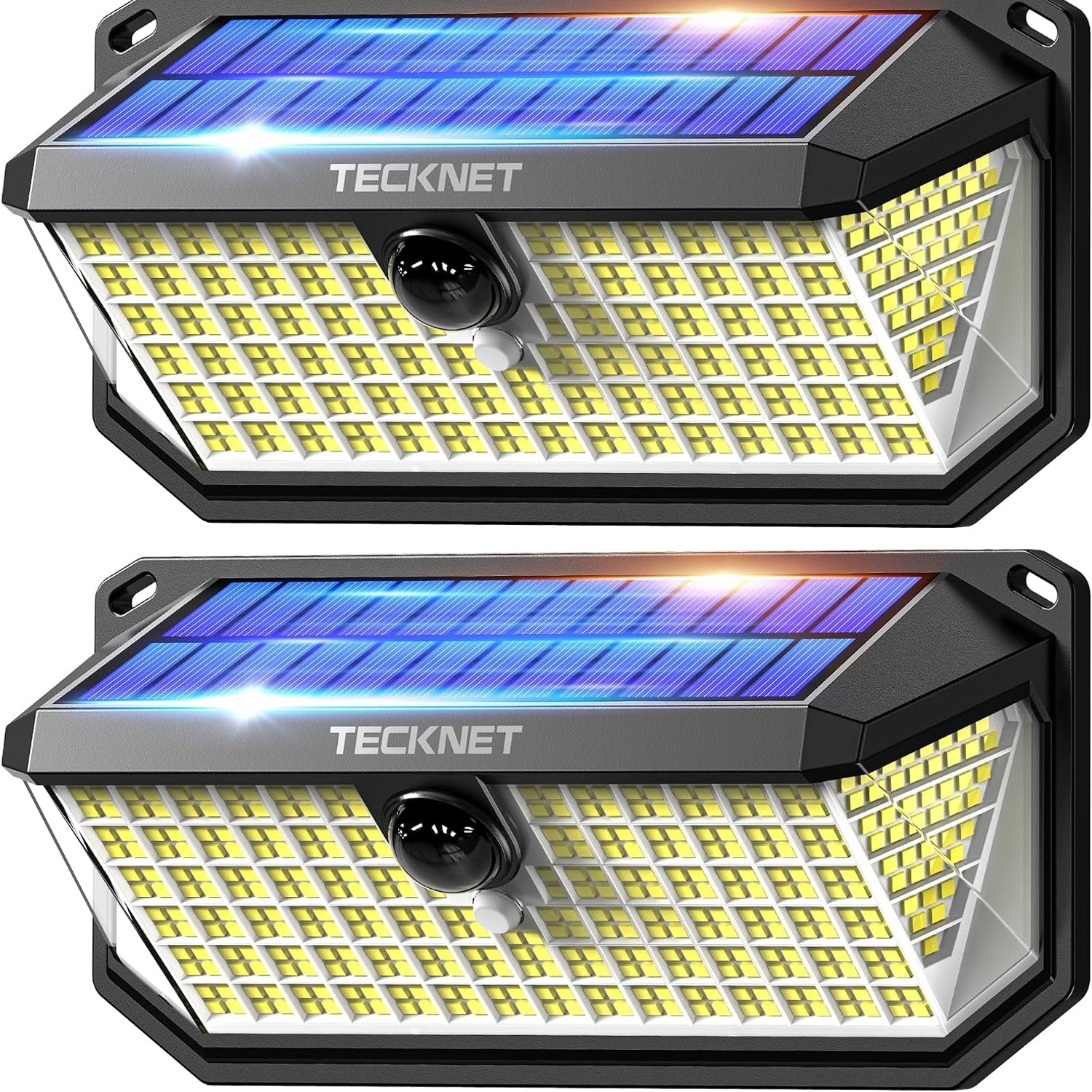
This TECKNET set includes two cool white outdoor lights. Each is described with 416 LEDs, three lighting modes, and a broad lighting angle. Before buying, think about where you need light, where sunlight falls, and how you want the lights to behave after dark.
Start with the area you actually use
It is tempting to choose a light by its biggest coverage claim. A more useful starting point is the route people take. Look at the walk from the gate, the step outside the laundry, or the space beside the garage.
Which part is hard to see? Where would light help you find a handle or spot an obstacle? A well-placed outdoor entrance light can be more useful than one aimed across a large area that nobody crosses.
With two fixtures, you can consider separate locations rather than expecting one light to cover everything. Both positions need their own sunlight and suitable mounting surface. Do not assume that a good spot for the first light guarantees a good spot for the second.
How solar charging affects your choice
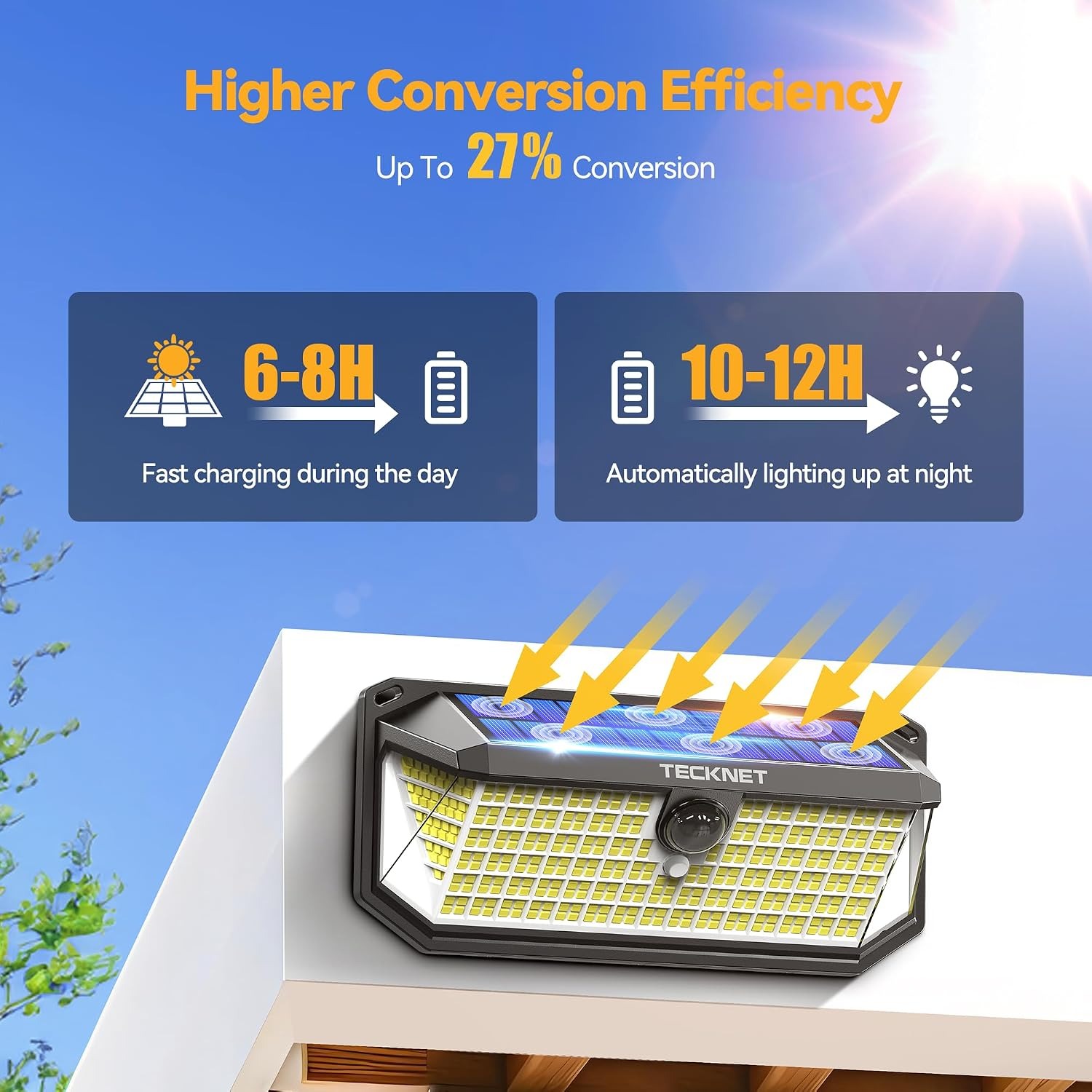
Solar lighting depends on the daylight available at its installed position. A convenient wall may be shaded by a roof, nearby building, or tree. The area below it might need light, but the panel still needs a useful chance to charge.
Check the proposed spot at different times of day. Notice shadows from fences and roof edges. Think about seasonal changes too, especially if the site receives sunlight only when the sun is high.
The supplier claims over 10–12 hours of lighting after a full day of charging. Treat that as a stated performance claim, not a promise for every night. The record does not supply a detailed test method or battery capacity. Your selected mode and the amount of movement may also affect how the stored charge is used.
Choose the mode that matches the job
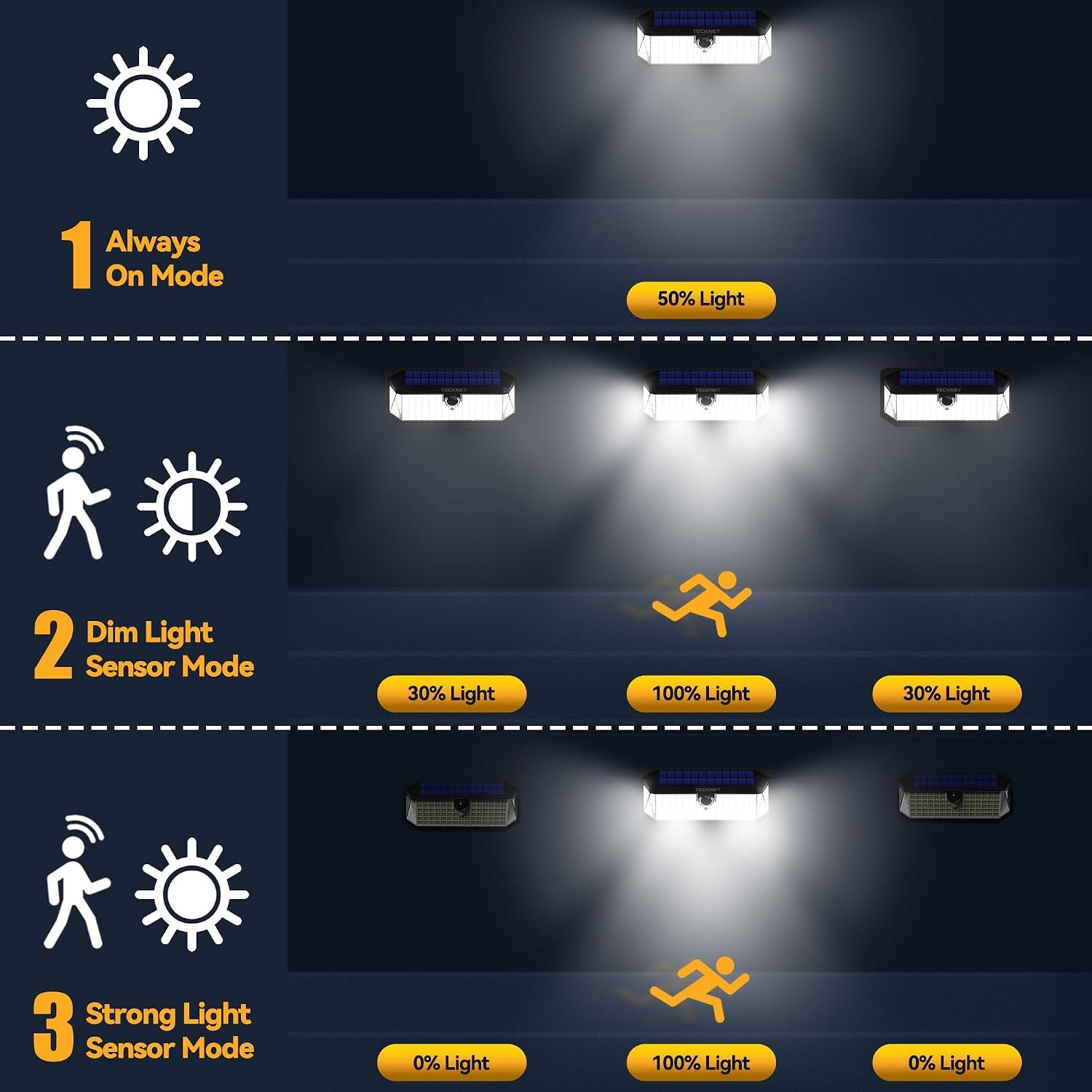
This three mode solar light offers continuous medium illumination, dim-to-bright operation, and motion-only operation. These choices serve different needs, so it helps to decide what you expect before installation.
Continuous medium mode is intended for steady light after dusk. It may suit a spot where you want the area visible without waiting for someone to approach. The supplier describes the light switching off after dawn in this mode.
Dim-to-bright mode provides a lower light level, then increases output when motion is detected. Motion-only mode stays unlit until a trigger calls for high light. That may suit an entrance used for short visits rather than an area where you want constant illumination. Follow the included instructions for the control sequence.
Understand lighting angle and sensor angle
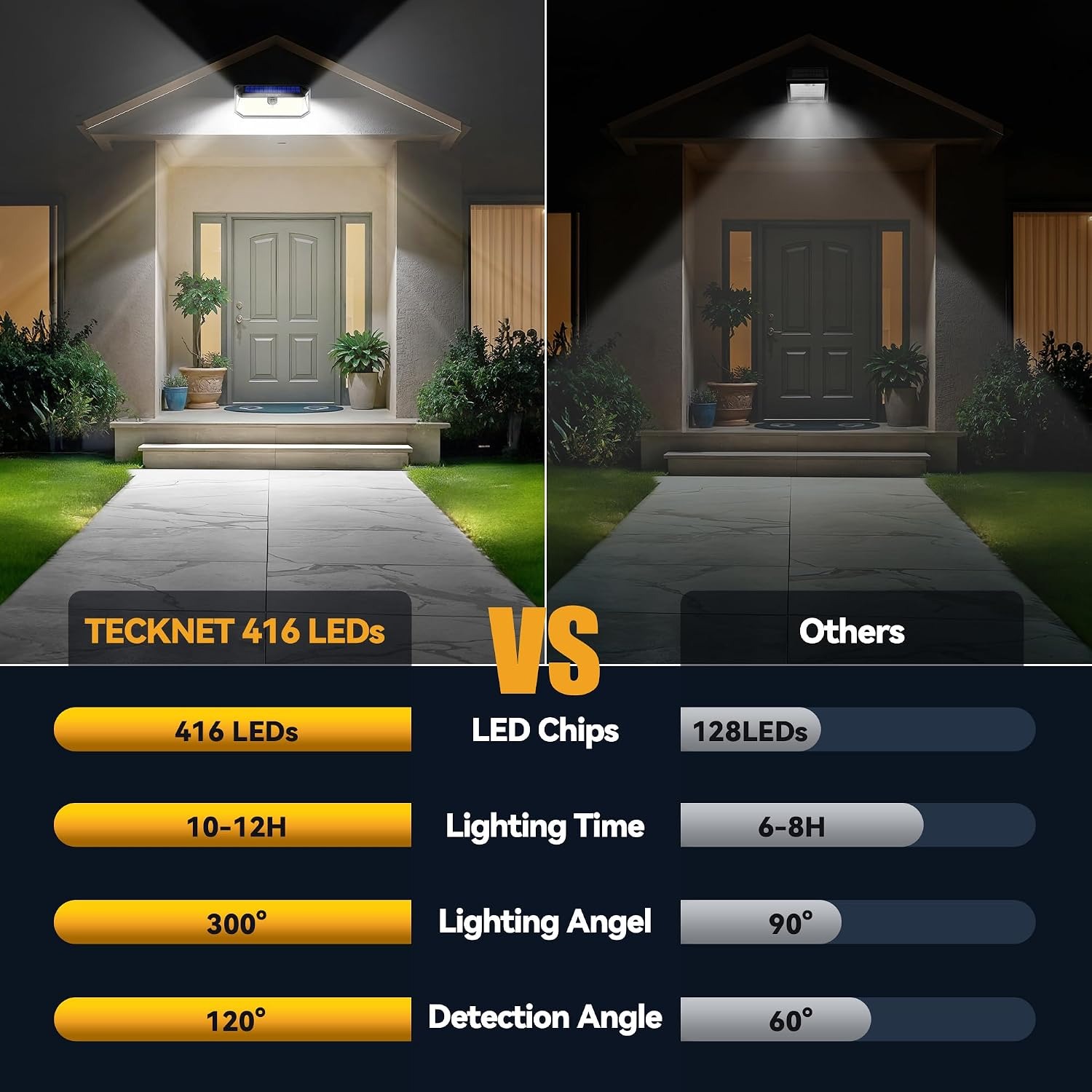
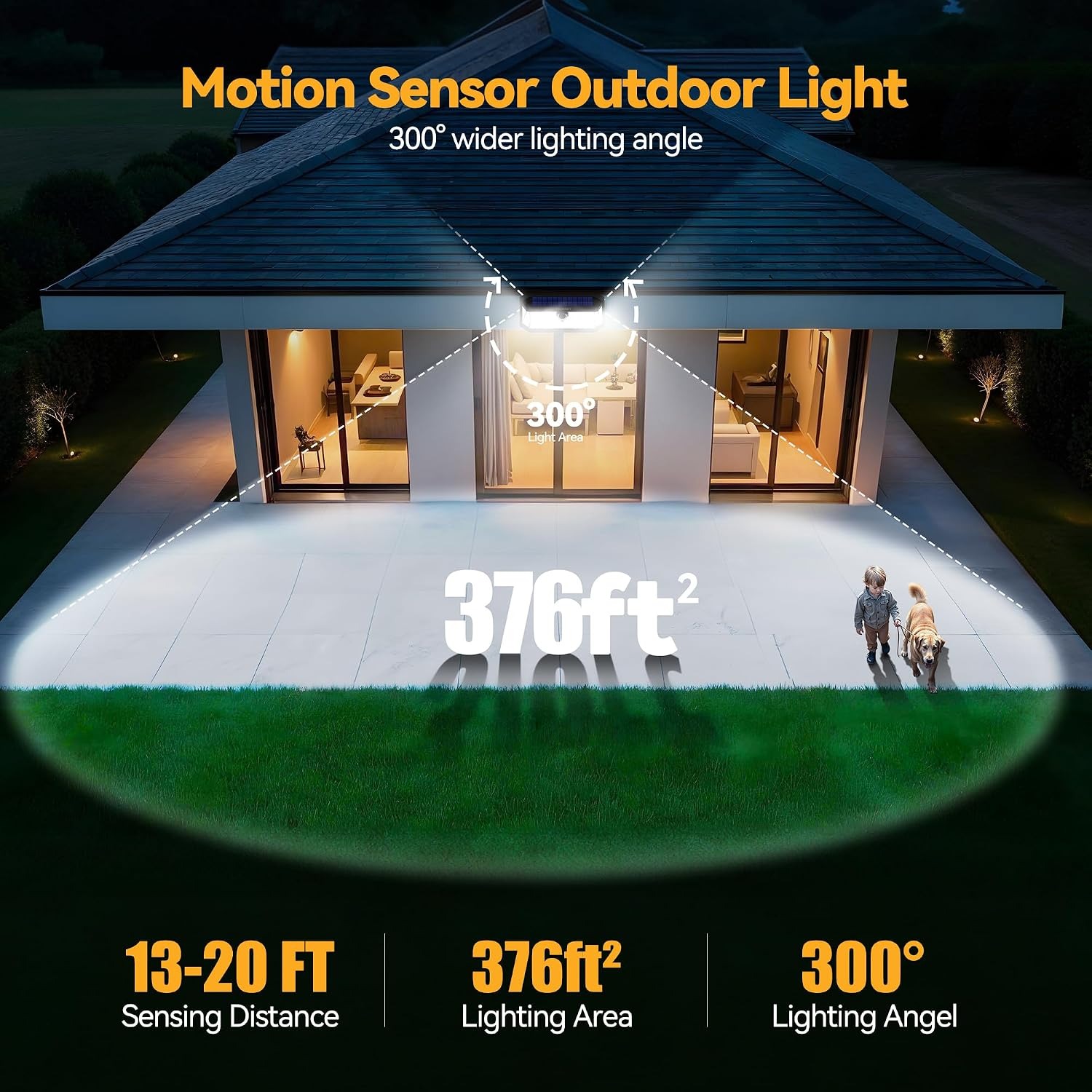
Two angles appear in this listing, and they mean different things. The stated 300-degree figure describes the spread of light. The PIR sensor has a stated 120-degree detection angle.
A wide angle solar light can cast light outside the area where its sensor detects movement. Someone may stand within the lit space without being in the most useful part of the sensing area. This is why the direction of the fixture matters.
The sensor range is listed as 13–20 ft. Once the light is installed and charged, walk along the approach you expect to use. Test from the gate, doorway, or parking position. Make sure the response suits the route rather than judging placement only by how the light looks on the wall.
Read LED numbers with care
The supplier describes 416 LEDs per fixture. The product details list 832 light sources, consistent with the combined count for the pair. The three-sided design is intended to spread light over a wider angle.
Those numbers do not tell you the measured brightness. Lumen output is not specified in the record, so there is no supported lumen figure to compare with another product. More LED beads alone do not establish how bright the ground will look.
When comparing a 416 LED solar security light with another model, look beyond the count. Consider the mode options, stated sensing range, charging location, and the information each listing provides. If you need a specific measured light output for a task, ask for that detail before ordering.
Decide whether cool white suits the space
This version is listed as cool white. It is a practical choice to consider for an approach, garden access point, or area beside a garage where your main aim is visibility.
The record does not specify a colour temperature in kelvin. If you are trying to match existing exterior lights, the words “cool white” may not give you enough detail for an exact match.
Think about where the light will fall as well as its colour. Aim an outdoor solar wall light toward the area you use, rather than toward bedroom windows or a neighbour's seating area. A useful position should help your household without making the surrounding space uncomfortable.
Check the fixing surface before ordering
The supplier lists wall mounting and recommends screws. Other methods, including adhesive and hanging, are mentioned, but they should not be treated as equally suitable for every surface.
Inspect the wall or fence where you plan to fit the light. It needs to accept secure fixings and remain sound in outdoor conditions. If you rent, check whether drilling or other exterior changes require permission.
The included-components entry confirms two lights only. It does not confirm which installation accessories come in the pack. Plan to check the supplied instructions and use fixings suited to your surface. If you are unsure about a wall, ask someone qualified to assess it rather than choosing a fixing by guesswork.
Know what the weather rating does and does not say
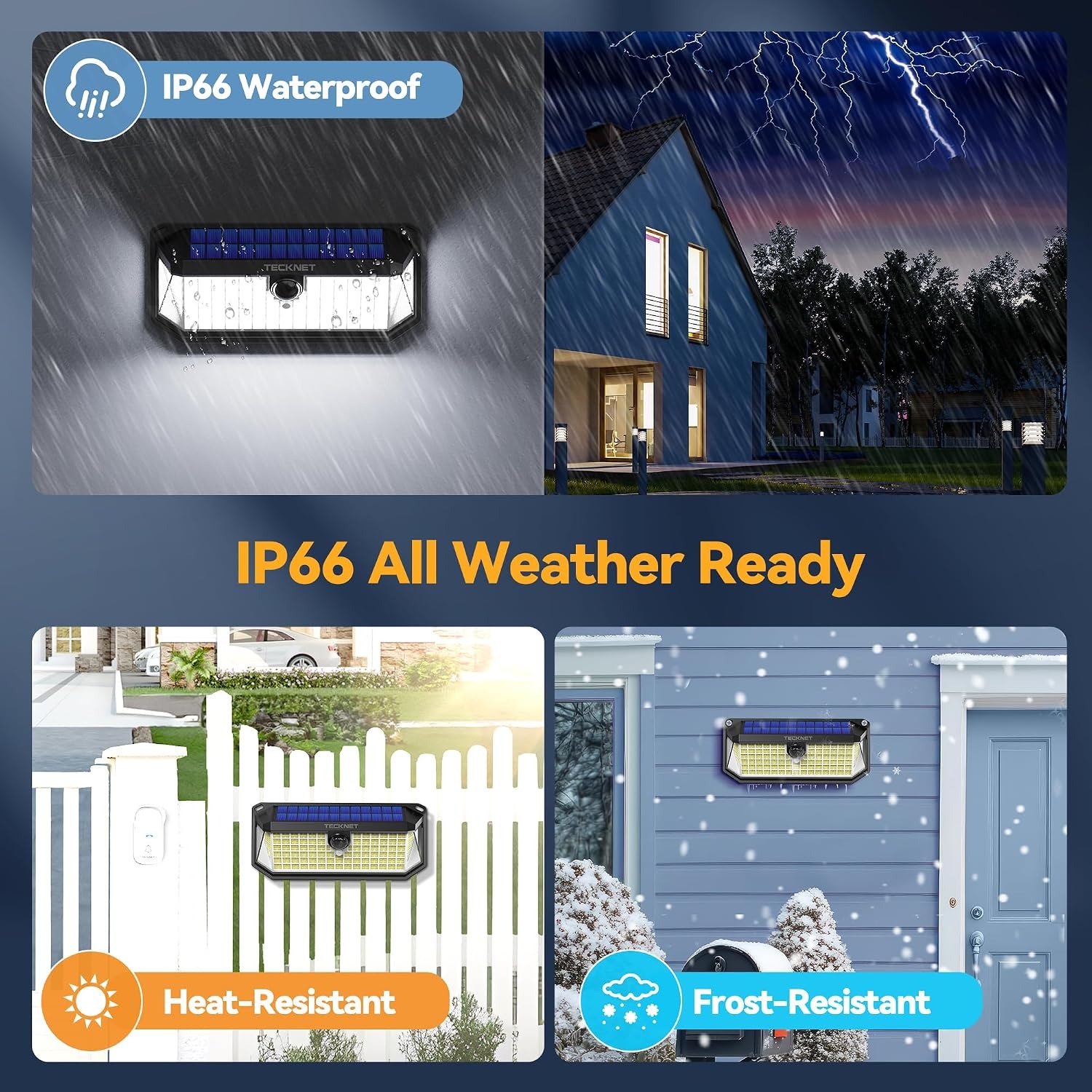
The supplier states an IP66 rating and lists ABS construction. These are useful details for an outdoor fixture, but they do not remove the need for sensible installation and care.
Do not immerse the lights or use pressure washing as a cleaning method. Check the mount after severe weather and look for loose fixings or damage before continuing use.
The record does not provide a defined operating temperature range. It also does not give a supported service-life figure. If your location has demanding exposure conditions, confirm suitability before ordering instead of relying on broad weather claims alone.
Make the two-pack work for your home
A solar garage light and a solar backyard light may serve quite different routines. One may be used briefly when you arrive home, while the other may sit beside a door that opens several times each evening.
You do not need to choose matching locations simply because the fixtures come as a pair. Start with the two places where lighting would make the clearest difference. Then check each location for sunlight, mounting access, and useful sensor direction.
A solar fence light could help beside a side gate, while the second fixture serves a porch. If the porch is deeply shaded, though, that plan may not suit solar charging. Let the site conditions guide the layout rather than forcing both lights into your first idea.
Keep care simple and regular
Dirt and leaves can cover the panel or obstruct the sensor. A quick visual check is a useful habit, particularly after windy weather or garden work.
Use a soft damp cloth to clean accessible surfaces gently. Avoid abrasive products, and do not force water into the fixture. Check the mounting points at the same time so small problems do not go unnoticed.
If performance changes, start with the basics. Has a branch grown across the panel? Has the selected mode changed? Is the sensor facing the intended route? Follow the supplied troubleshooting instructions. The record does not specify a replacement battery type or battery replacement procedure, so do not guess at either.
Check the missing details that matter to you
The listed dimensions are 22 × 6.4 × 10.5 cm, and the recorded weight is 680 g. The listing does not clearly say whether that weight applies to one fixture or the full pack.
Battery capacity, measured lumen output, and a defined warranty term are not supplied. Delivery lead time is also blank. If any of those details decides your purchase, ask the store before paying.
The best solar security light for your situation is one that suits the actual site and has the information you need. This pair offers several useful lighting choices, but it is still a lighting product. It does not record events, identify visitors, or replace an alarm.
The short version
Choose this TECKNET two-pack if you want solar-powered, cool white outdoor lighting with steady and motion-responsive modes. Its stated 300-degree lighting angle and separate PIR sensing specifications give you useful starting points for planning.
Check sunlight first, then mounting and sensor coverage. Confirm any missing specification that matters to you, and review delivery and returns terms before ordering. A suitable position and the right mode matter more than simply placing a light wherever there is spare wall space.